ARTICLE

Peer Groups | Special Interest & Regional Groups
Why We Run Peer Groups: Learning That Lasts Beyond the Classroom

At ASI Wise & Sensory Project, we believe that truly understanding the art of therapy, as beautifully described in Beverley Williams’ MSc research on Ayres Sensory Integration®, takes time, support and connection. Therapeutic confidence and flow grow through mentorship, shared reflection and real practice alongside others. That’s why our Community of Practice offers structured, supportive peer groups that extend well beyond formal learning.

Our groups create a space where therapists continue growing together, sharing insights, challenges and moments of therapeutic magic, with live in‑person/online discussions plus real‑time forum support from an active peer network. Wherever you are in your practice, just starting or long-experienced, you’re welcome. ASI® learning continues across your career, and we’ll travel that journey with you.

Who this is for

  • Occupational Therapists, Physiotherapists, Speech & Language Therapists, Psychologists and Educators applying ASI® in practice.
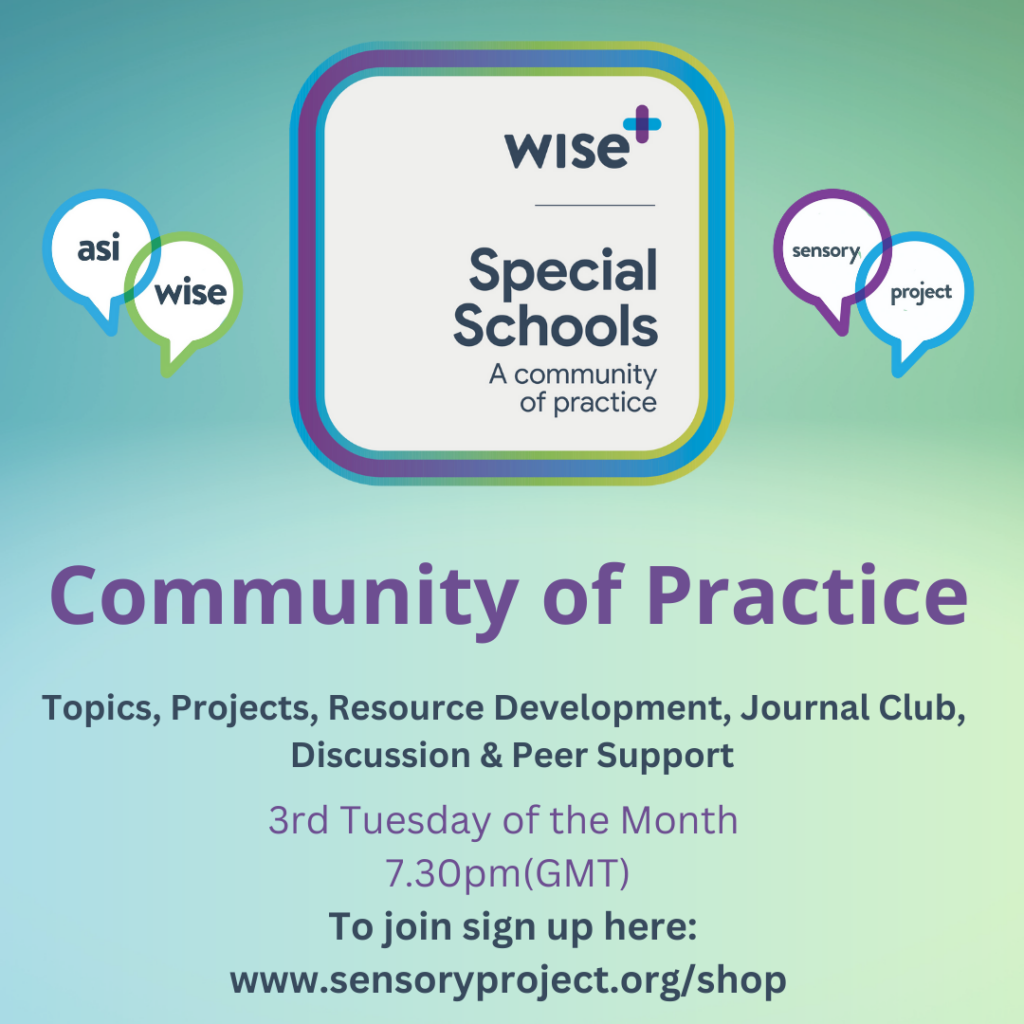
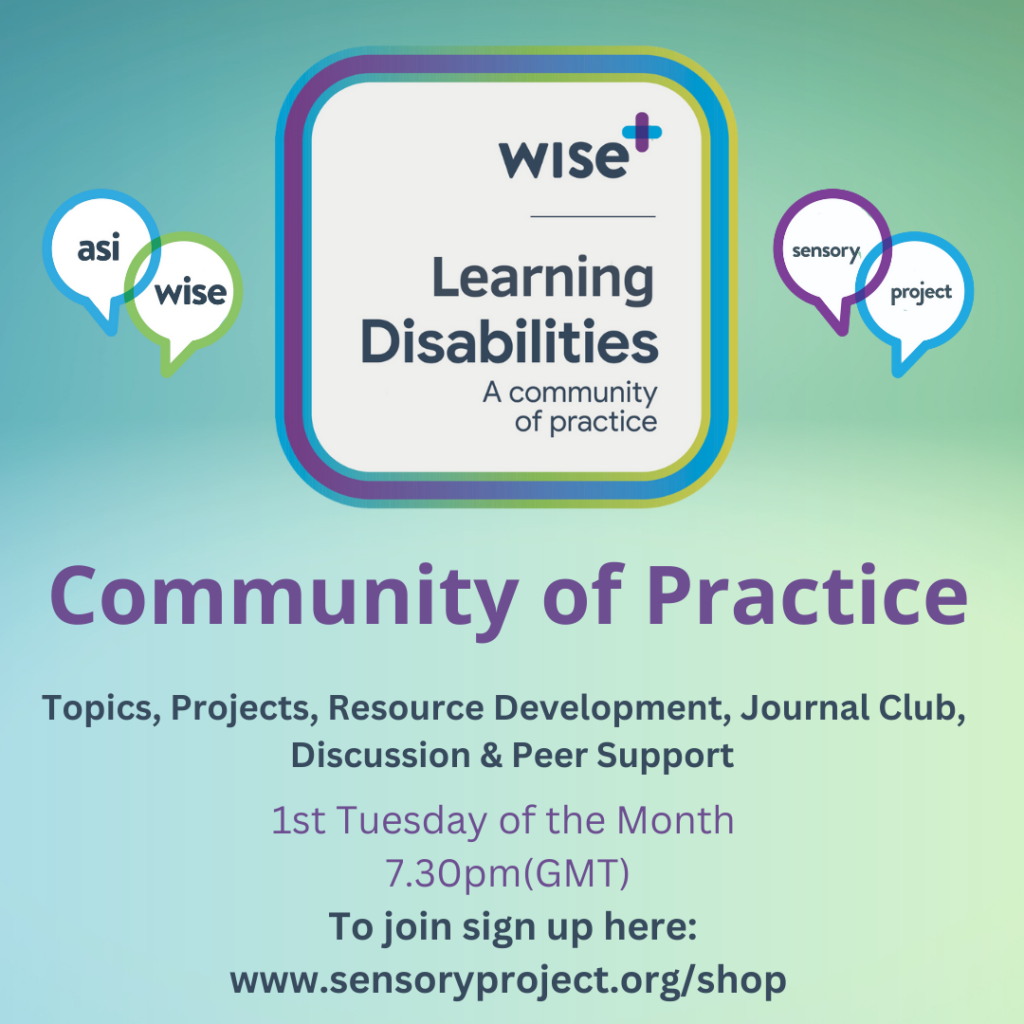
  • Clinicians from all settings are welcome. This includes CAMHS (Child and Adolescent Mental Health Services), Adult Mental Health, Forensic and PICU services, Community, Eating Differences, Perinatal, Schools, Learning Disabilities, and older adults.
  • Practitioners seeking case-based, mentored peer learning that builds confidence in assessment, intervention and clinical reasoning.

How our Peer Groups Work

  • Live discussions: facilitated sessions (online or in-person) focused on practical themes and case material.
  • Real-time forum community: day‑to‑day questions, resources and quick wins between sessions.
  • Tutor-led inputs that complement your ongoing learning, plus signposting to evidence and best practice.
  • Structured reflection: build your clinical reasoning, documentation and outcomes tracking.
  • Supervision pathways: optional 1:1 or small‑group supervision to deepen practice.
  • Across the lifespan paediatrics and adult services: with specialist strands in Schools, Learning Disabilities, Perinatal, Eating Differences, Mental Health, Older Adults and complex presentations.

What makes us different

  • Lifespan & mental health expertise: uncommon depth in Schools, Learning Disabilities, Perinatal, Eating Differences, Mental Health, Older Adults – pathways.
  • Small, facilitator-led groups (online and in person) with a peer-supervision feel, supported by forums.
  • Real-world, case-led learning: bring your cases; leave with concrete next steps you can use tomorrow.
  • Research‑informed & clinician‑led: shaped by UK practice realities and current literature.
  • Always‑on community: rapid responses and mutual support via our forums between sessions.
  • Neurodiversity‑affirming, rights‑based practice: strengths‑focused, consent‑led and co‑produced, honouring diverse sensory and communication profiles.

Join Our Community of Practice Mentoring, Tutor Groups and/or Peer Group(s) for your clinical area, to enhance your practice today

What you’ll gain

  • Clarity in assessment and intervention planning
  • Confidence in the therapeutic use of self and flow
  • Practical tools, templates and outcome ideas
  • A trusted network that has your back between sessions

FAQs

What is a Community of Practice in ASI®? A supported, friendly peer network where clinicians learn with and from each other, sharing cases, resources and reflective practice, guided by experienced facilitators.

Do I need to be ASI® certified? You’re welcome at every stage of your sensory learning, exploring, new to ASI®, or deepening advanced practice.

How does forum support work? You’ll join a moderated channel for your group to ask quick questions, share wins, and get signposts between sessions.

Is this recognised CPD? Yes, in line with HCPC standards, you can evidence reflective learning in your HCPC/RCOT CPD portfolio.

How is this different from a course? By contrast, our Community of Practice helps you apply what you learn, with peer support, so you make steady progress, celebrate wins, and receive solution-focused, evidence-based support.

Can non‑OTs join? Yes, sensory integration is everyone’s business. Physios, SLTs and wider health, social and education colleagues are welcome to join the peer support that links to your practice area.