Autism and Homelessness: Why does it matter to OT’s? And it should!

Although today I was sent a copy of a link to an article entitled “First significant study on autism and homelessness”, this is not the first I have known about the increased risk of homelessness in those with Autism or ways that as a profession Occupational Therapy can offer something to help reduce this risk. […]
Neuroscience and Sleep
Submitted by guest blogger Ruth OT Before I trained to be an occupational therapist, I studied neuroscience to masters by research level. It is so helpful in my work to have that underpinning knowledge of some of the things going on in the brain and how these affect behaviour. However, I don’t miss growing neurons […]
Resources for Practice in Mental Health and Trauma-Informed Care: improving self-regulation to eliminate control and restraint aka TMAV

Resources for Practice: Reducing use of control and restraint in mental health.
Mental Health Awareness Week 2018: Millennials feel more stressed in the workplace than older colleagues, study finds

Mental Health Awareness Week 2018: Millennials feel more stressed in the workplace than older colleagues, study finds — Read on www.google.co.uk/amp/s/www.independent.co.uk/life-style/millennials-stress-workplace-higher-baby-boomers-mental-health-awareness-week-2018-a8350631.html?amp
Research Update:Dark Chocolate May Boost Brain Function, Immunity, And Mood
Chocolate as therapy? Two small studies may provide more evidence for dark chocolate’s health benefits. And at reasonable doses. — Read on www.forbes.com/sites
Supporting People with Anxiety, Using Sensory Integration and Other Strategies
Submitted by Guest authour Jane OT As I read the recent article “14 Phrases Kids Said That Were Code Words for ‘I’m Anxious“ from The Mighty, It felt familiar – like I had met every one of these responses to anxiety and not just from children. “What’s wrong with me?”… “I’m tired.” … “Can’t we stay […]
Occupational Therapy and Trauma 3: A Tool for considering the physical environment in children’s residential homes to address sensory processing issues in trauma-affected children

This article by Clinical Psychologists Christopher Robinson and Alicia Madeleine Brown in the Scottish Journal of Residential Child Care includes a lovely environmental checklist (adapted from Simpson 2009) used in considering the physical environment in three children’s residential homes. Abstract: Sensory processing issues are generally considered to be clinically significant in children who have suffered […]
What is Ayres’ Sensory Integration Therapy all about?
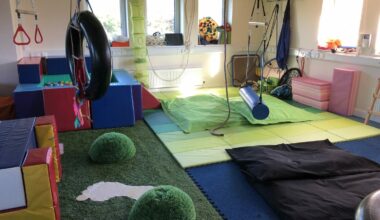
Today I was chatting to another therapist, who remarked on how people think it’s the room and equipment that make the therapy. Ayres’ Sensory Integration is about how the therapist mindfully uses knowledge gained through thorough assessment to carefully plan and create an environment so interesting, motivating and exciting to their individual client that they […]
RESOURCES FOR PRACTICE: USING THE THEORY OF AYRES’ SENSORY INTEGRATION TO INFORM CLINICAL PRACTICE WITH OLDER ADULTS – 1.

We need to consider the importance of maintaining tactile discrimination skills – adequate tactile perception is necessary for using tools in a skillful way for participation in lifelong hobbies like sewing, model making, cake icing and painting. Last night we were delighted to receive a great fb update from our friend and colleague Tina Champagne. […]
Ayres’ Sensory Integration and ADHD; what do we know?

In 2004 Aviva Yochman, Shula Parush and Asher Ornoy summarised a lot of history about ADHD and Sensory Integration in a journal article; Responses of Preschool Children With and Without ADHD to Sensory Events in Daily Life In 2010 Shelley Lane published a study that concluded that 54% of children with ADHD have sensory over-responsivity. In […]